Alright, time for a petty squabble.
Recently, Taylor Lorenz a fairly influential reporter has been receiving lots of online criticism due to receiving funds from the Omidyar Network in 2025, a 501(c)(3) nonprofit organization, during a period of time where she published an exposé on the Chorus program1, a dark money initiative which offered left leaning content creators monetary compensation in exchange for staunchly pro-democrat content during the 2024 election cycle.
Lorenz’s most vocal critic appears to be online political commentator Steven Bonnell II (better known as “Destiny”), who during more than an hour long argument with Lorenz, crystallized his point in the following excerpt:
“Chorus and what you [Taylor Lorenz’s arrangement with the Omidyar Network] do are different. And they’re different which is why the reporting requirements are different2. But you both received dark money”3 -- Steven Bonnell II “Destiny”
Given the severity of the allegations (essentially Lorenz’s credibility as a journalist is now on the line), and the one-sided nature of this online squabble, I feel compelled to clarify some important points in defense of Lorenz.
Dark Money
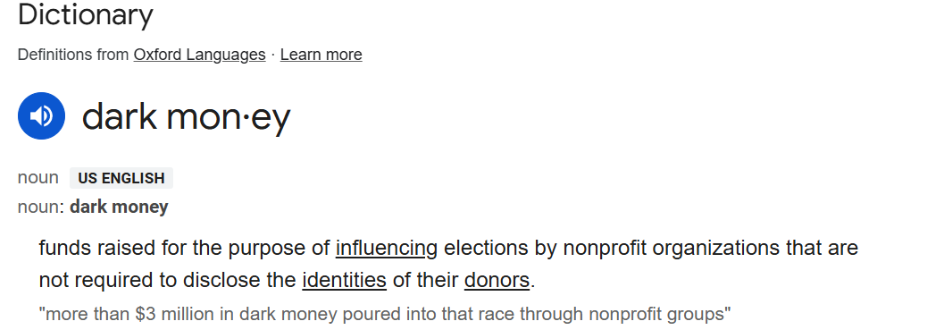
For one, “dark money” as a term relates to a pretty specific phenomena in US politics wherein nonprofit organizations hide their revenue sources (donors) to pay for political advertisements (or something equivalent). So, categorically Lorenz did not take dark money. However, even if we assume a more general meaning, like receiving anonymous money to advance a specific interest, the Omidyar Network’s program in question does not appear to satisfy that criteria.
The Omidyar Network’s “Reporters in Residence” program explicitly states that their reporters “maintain full editorial control and discretion over their work”4--which seems pretty unlike what a “dark money” adjacent scheme would entail. Second, the Omidyar Network publicly discloses all the reporters they sponsor each year (that’s how we know Lorenz was part of the network to begin with).
Now, the funding behind the Omidyar Network, as of writing this blog post, is anonymous. Although the Omidyar Network claims tech billionaire Pierre Omidyar acts as the sole funder behind the program5, unless the Omidyar Network publicly releases their donor list (i.e., document they send the IRS), we have no mechanism of validating their claim. Still even with a potentially anonymous funding source, the Omidyar Network, as a 501(c)(3) nonpolitical nonprofit, structurally cannot compel any of their program recipients to lobby for any particular aim or they would risk losing their 501(c)(3) status.
External funding should always warrant extra caution and care from journalists. But if a journalist publicly receiving money from a nonpolitical nonprofit (intended to support journalism) destroys your ability to trust that journalist, who exactly do you then trust? Surely not a live streamer; they gladly accept money from anyone.
-
A Dark Money Group Is Secretly Funding High-Profile Democratic Influencers | WIRED ↩
-
The 501(c)(3) and 501(c)(4) do have different reporting requirements for the IRS but neither requires a public disclosure of donor lists from my understanding. ↩
-
video link if you feel like increasing your blood pressure ↩
-
Omidyar's blog post announcing their class of reporters for 2025 including Lorenz. ↩
-
listed in their FAQ section, note that this page might change in the future because nonprofits are allergic to not updating their websites. ↩